Why Sciatica Gets Worse After 50, And What Nobody Tells You
Fact-checked · Sources: NHS, Harvard Health, Johns Hopkins Medicine
If you're over 50 and sciatica has started taking over your life, the burning pain down one leg, the numbness, the way it makes even simple things like getting out of a chair feel like a battle, you're not imagining it. And you're not being weak.
There is a real reason sciatica feels different, and often harder, after 50. And most people are never told what it actually is.
Here's the honest picture.
What sciatica actually is
Sciatica is not a condition on its own. It's a symptom.
According to the NHS, sciatica happens when the sciatic nerve, which runs from your lower back all the way down to your feet, becomes irritated or compressed. The pain usually affects your bottom and the back of one leg, sometimes reaching your foot and toes.
The most common cause is a slipped disc, when the soft cushion between the bones in your spine pushes out and presses on the nerve. Other causes include spinal stenosis (narrowing of the spine) and spondylolisthesis (when a spinal bone slips out of position).
Why it changes after 50
Here's what most GPs don't have time to fully explain in a 10-minute appointment.
Your spine naturally changes as you age. The discs between your vertebrae, which act as shock absorbers, begin to degenerate from as early as your 30s. But the bigger shift for most people happens around 50.
According to Johns Hopkins Medicine, osteoarthritis, the gradual wear and tear of your joints, begins to cause changes in most people's spines by age 50. That's why most people who develop symptoms of spinal stenosis are 50 or older.
Spinal stenosis is the narrowing of the space inside your spine where nerves pass through. As this space gets smaller, it can squeeze and irritate the sciatic nerve. Harvard Health confirms that spinal stenosis tends to start showing up around age 50 to 55 and is the most common cause of sciatica after age 65.
The American Academy of Orthopaedic Surgeons states that by age 50, up to 95% of people have some wear and tear, what they call degenerative changes, in their spine.
That's not a reason to panic. It's a reason to understand what you're dealing with.
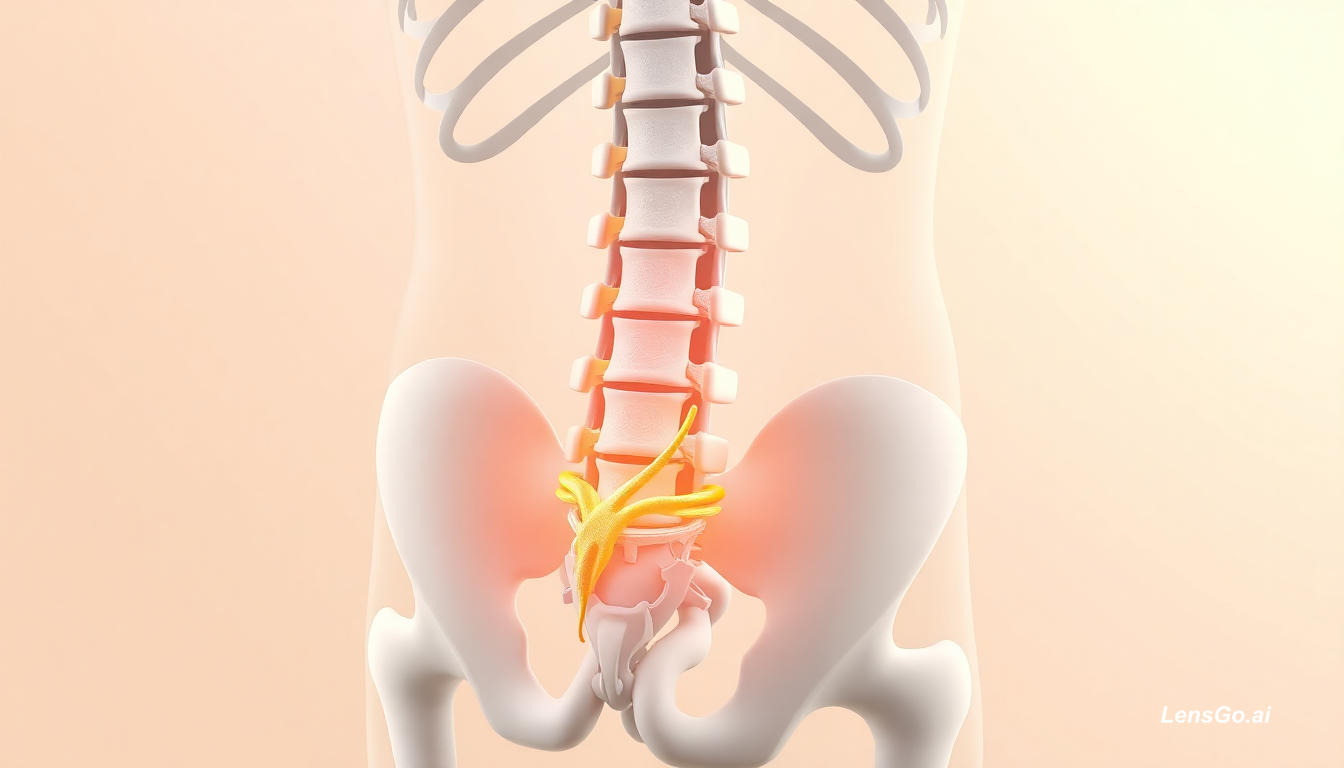
What's actually happening in your spine after 50
The one thing most people do that makes it worse
They rest. Completely.
When the pain is bad, lying down for hours, or days, feels like the logical thing to do. But both the NHS and Harvard Health are clear on this: prolonged bed rest does not help sciatica and is not recommended.
The NHS advice is direct: do not sit or lie down for long periods. Even if moving hurts, it's not harmful, and keeping active can help you recover faster.
Sitting is also worth watching. Harvard Health notes that sitting increases pressure on the discs in the lower back, so long periods of sitting or driving should be avoided during a flare-up.
What actually helps
The NHS recommends staying as active as possible and engaging in gentle exercise. Walking, swimming, and stretching are all specifically mentioned.
According to South Tees NHS Foundation Trust, exercise for sciatica linked to spinal stenosis isn't about changing the narrowing itself. The purpose is to reduce irritation, improve how the nerve root responds to movement, and build muscle strength and balance.
Walking. Short, gentle walks at a slow and steady pace.
Swimming. Low impact on the joints, good for people who find walking painful during a flare-up.
Gentle core strengthening. Your back, pelvis, and abdominal muscles all work together to support your lower spine.
Knee-to-chest stretches. Lying on your back, gently bringing one knee up toward your chest while keeping the other foot flat on the floor.
Before starting any exercise programme for sciatica, speak to your GP or a physiotherapist first.
When to get help immediately
Most sciatica improves on its own within a few weeks to a few months, according to the NHS and Cleveland Clinic.
The NHS says to go to A&E immediately if you:
- Find it hard to start peeing, cannot pee, or cannot control when you pee
- Cannot control when you poo, or do not notice when you need to go
- Have numbness around your genitals or bottom
These could be signs of a serious condition called cauda equina syndrome, which needs emergency treatment. Do not wait. Do not drive yourself, call 999.
The bottom line
Sciatica after 50 is common. It's real. And it's not just in your head.
Understanding what's driving your pain is the first step toward managing it properly, without surgery, without strong painkillers, and without spending months flat on your back waiting for it to pass.
Sources
- NHS: Sciatica
- Harvard Health: Finding Relief for Sciatica
- Johns Hopkins Medicine: Lumbar Spinal Stenosis
- Cleveland Clinic: Sciatica
- American Academy of Orthopaedic Surgeons: Lumbar Spinal Stenosis
- South Tees NHS Foundation Trust: Ten Lumbar Spinal Stenosis Facts