4 Sciatica Pain Relief Products That Actually Work for Over 50s (UK 2026)
Fact-checked · Sources: NHS, Mayo Clinic, Harvard Health
When sciatica flares up, most people over 50 want one thing: relief that does not involve another trip to the GP, another prescription, or another week lost to the sofa.
The good news is that a few well-chosen products can genuinely take the edge off. Not by "curing" sciatica — there is no magic gadget for that — but by making daily life more comfortable while your body heals.
Below are four products we recommend, based on what physiotherapists and pain specialists consistently suggest for older adults: targeted electrical stimulation, lumbar support, and pressure relief while sitting.
What to look for in a sciatica product
Before spending money, it helps to know what actually matters.
The NHS recommends staying active and using gentle movement as the first line of defence. But alongside that, products that reduce pressure on the lower back and sciatic nerve, support good posture, or interrupt pain signals can be useful. NHS
Mayo Clinic notes that over-the-counter pain relief is often helpful, but non-drug options like TENS (transcutaneous electrical nerve stimulation) and physical support can reduce reliance on medication. Mayo Clinic
Here is what we looked for in each pick:
- Evidence-based mechanism. The product should do something physiologically useful — reduce nerve irritation, support the lumbar spine, or block pain signals.
- Safe for over 50s. No awkward gymnastics required. Easy to put on, adjust, and use.
- Real user feedback. Thousands of reviews, with a consistent pattern of helping people with back and leg pain.
- Good value. It does not have to be cheap, but it should be worth the price.
1. 4-in-1 TENS & EMS Muscle Stimulator — best for drug-free flare-up relief
TENS works by sending small electrical pulses through the skin to interfere with pain signals travelling to the brain. It is one of the most commonly recommended non-drug options for sciatica and lower back pain.
Harvard Health describes TENS as a useful option for some people with chronic pain, particularly when used alongside movement and stretching. Harvard Health
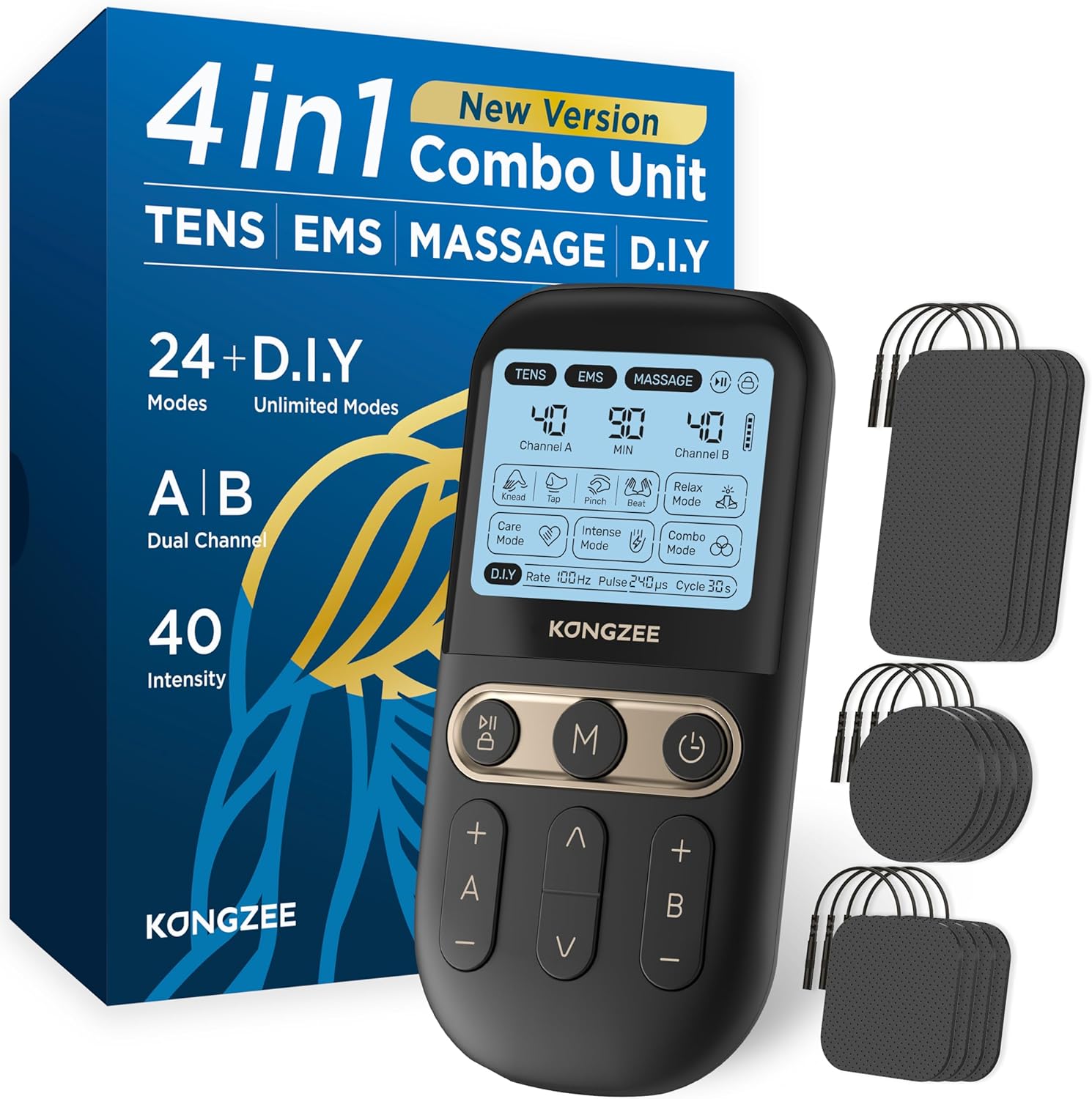
4 in 1 - D.I.Y TENS & EMS Muscle Stimulator
Best for: drug-free pain relief at home
This rechargeable dual-channel device combines TENS, EMS and massage modes, so you can treat two areas at different intensities at the same time. It comes with 12 electrode pads, which is plenty for a few weeks of regular use.
Why it works for over 50s: No bending, no twisting, no strength required. You stick the pads on, choose a mode, and let the device do the work while you sit or lie comfortably. Many people use it in the evening when pain tends to spike.
Important: Do not use TENS if you have a pacemaker, are pregnant, or have epilepsy. Speak to your GP before use if you have any medical condition.
Affiliate link — we may earn a small commission at no extra cost to you.
2. Sparthos Back Support Belt — best for everyday lumbar support
A lumbar support belt is not a cure, but it can remind your core to stay engaged and reduce strain on the lower back during walking, light housework, or standing for long periods.
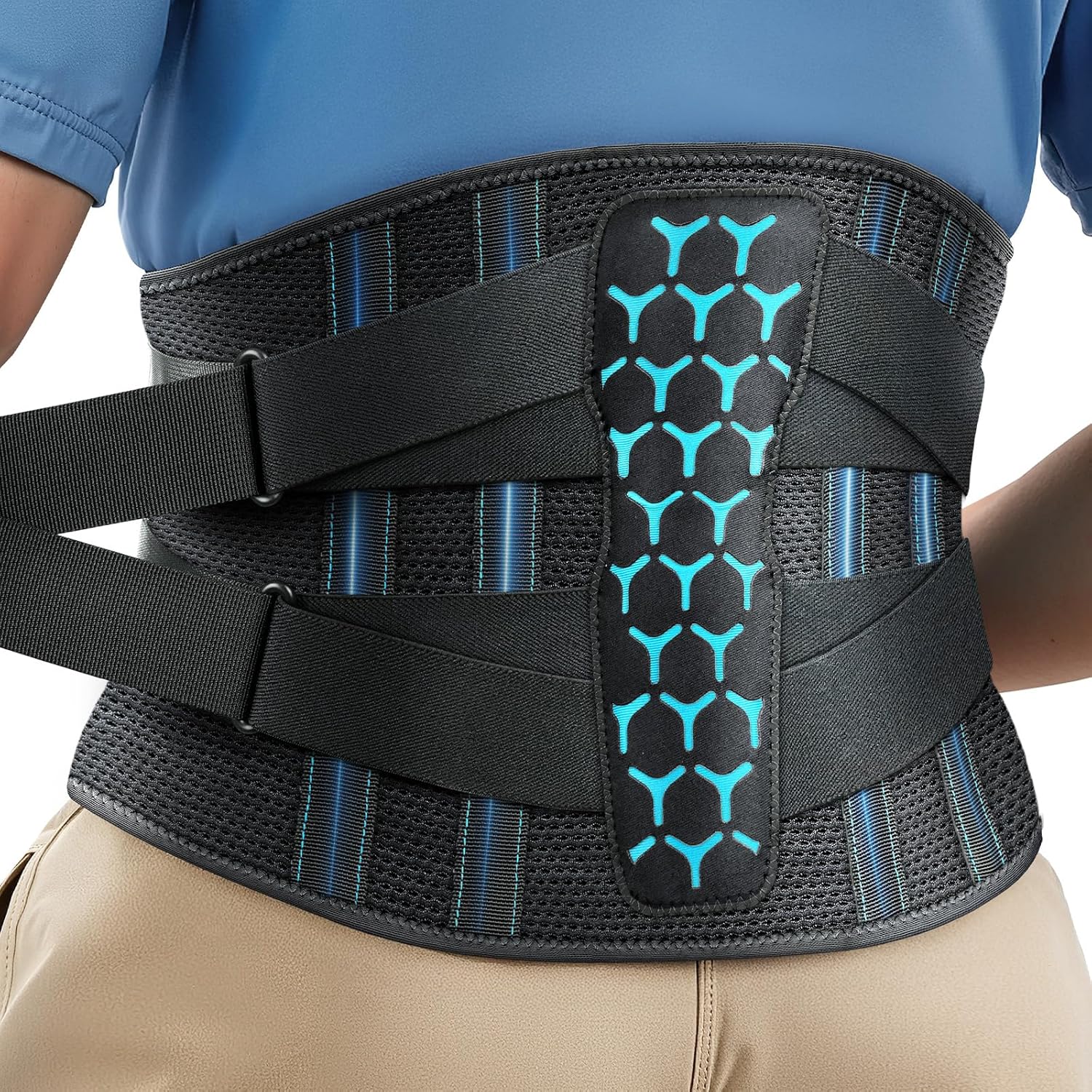
Sparthos Back Support Belt
Best for: everyday lumbar support
The Sparthos belt is one of the most reviewed lumbar braces available, with a 4.4-star rating from over 66,000 users. It is breathable, adjustable, and designed to be worn under or over clothing.
Why it works for over 50s: It gives your lower back a little extra confidence during the activities that normally make you cautious — vacuuming, gardening, walking the dog, or standing in a queue. The lumbar pad sits right where most people with sciatica feel instability.
Affiliate link — we may earn a small commission at no extra cost to you.
3. Copper Fit X-Back Brace — best for adjustable lower-back support
If you want something lighter than a full lumbar belt but still supportive, the X-Back design is worth considering. It pulls the shoulders back gently and supports the lower back without the bulk of a rigid brace.
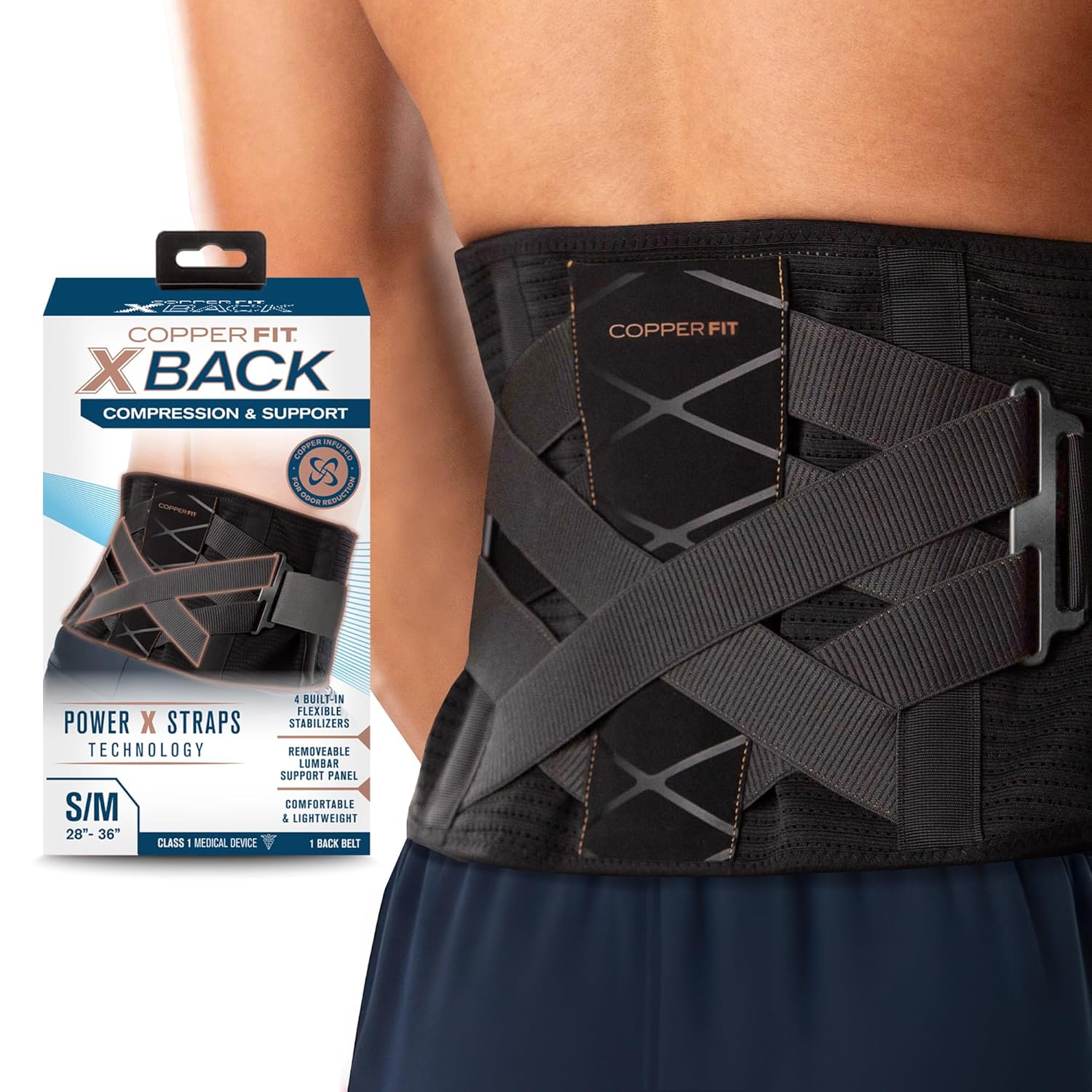
Copper Fit X-Back Brace for Lower Back & Lumbar Support
Best for: adjustable lower back support (L/XL)
This adjustable, breathable brace is designed to support the lower back during activity or long periods of sitting. The large/X-large size fits most adults comfortably, and the straps are easy to tighten one-handed.
Why it works for over 50s: It is less restrictive than a full belt, so it is easier to wear for longer stretches — including at a desk or while doing light jobs around the house. The breathable fabric also helps if you tend to overheat.
Affiliate link — we may earn a small commission at no extra cost to you.
4. POOTACK Memory Foam Seat Cushion — best for comfortable sitting
Sitting increases pressure on the discs in the lower back. Harvard Health specifically warns that long periods of sitting can worsen a sciatica flare-up. A good cushion redistributes pressure so your tailbone and lower back are not taking all the load. Harvard Health
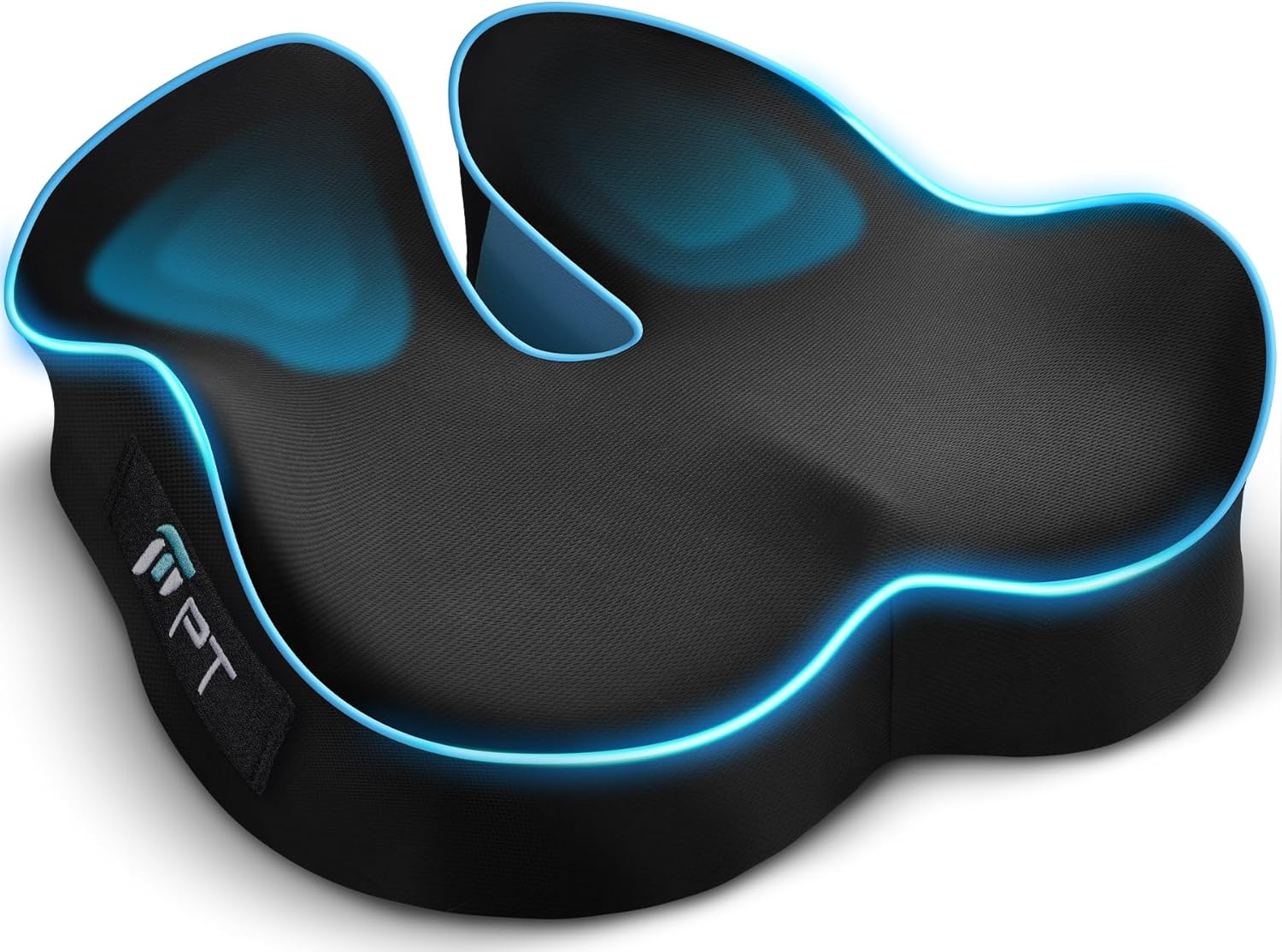
POOTACK Memory Foam Seat Cushion
Best for: comfortable, longer sitting
This non-slip memory foam cushion is designed for office chairs, cars, dining chairs, and travel. The contoured shape lifts the hips slightly and reduces pressure on the coccyx and lower spine.
Why it works for over 50s: It turns a hard dining chair or ageing car seat into something much kinder on the sciatic nerve. If you have to sit for more than 30 minutes at a time, this is one of the simplest upgrades you can make.
Affiliate link — we may earn a small commission at no extra cost to you.
How to use these products together
None of these products replaces movement, physiotherapy, or medical advice. But used together, they can make a real day-to-day difference.
Here is a simple routine many people over 50 find helpful:
- Morning: Do 5 minutes of gentle movement — try our 5-minute morning routine before getting out of bed.
- During the day: Wear the Sparthos belt or Copper Fit brace when you know you will be standing or walking more than usual. Use the POOTACK cushion whenever you sit.
- Evening: Use the TENS unit for 20–30 minutes while you relax, to calm down a flare-up before bed.
The key is consistency. One product used once will not change much. A small routine, repeated daily, often does.
When to see a professional
Products help with symptoms. They do not fix the underlying cause of sciatica.
The NHS advises seeing your GP if your symptoms have not improved after a few weeks, if the pain is getting worse, or if it is affecting your daily life. Go to A&E immediately if you have any of the following:
- Difficulty peeing, or not being able to control when you pee
- Loss of bowel control, or not noticing when you need to go
- Numbness around your genitals or bottom
These can be signs of cauda equina syndrome, which needs urgent treatment. NHS
The bottom line
Sciatica after 50 is stubborn. But the right products, used sensibly, can make the difference between surviving the day and actually getting through it comfortably.
Start with the one that matches your biggest daily problem: flare-ups at home (TENS), standing and walking (Sparthos belt), lighter all-day support (Copper Fit), or sitting pain (POOTACK cushion). Build from there.